

Types of capnometers
Capnometers are medical devices used to measure the concentration of carbon dioxide (CO2) in a patient’s breath during anaesthesia or resuscitation. These devices are essential in monitoring the respiratory system of patients during surgeries and in critical care units. There are 5 different types of capnometers available in the market, each with its unique features and capabilities.
1. Mainstream Capnometer
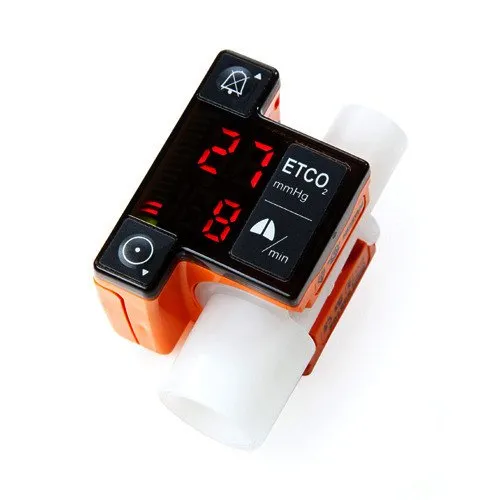
The mainstream capnometer is the most widely used type. It connects directly to the patient’s endotracheal tube or breathing circuit, and it measures the CO2 in real time as the breath passes through an adapter at the airway.
Because it reads the breath where it happens, it is fast, with no sampling line to block and no water trap to fill. That makes it the natural choice for intubated and ventilated patients, in theatre, intensive care, resuscitation and transport. The trade-off is that it needs an airway to sit on, and the sensor adds a little weight and dead space at the airway. Most mainstream sensors use non-dispersive infrared technology, explained in how NDIR capnography sensors work.
2. Sidestream Capnometer
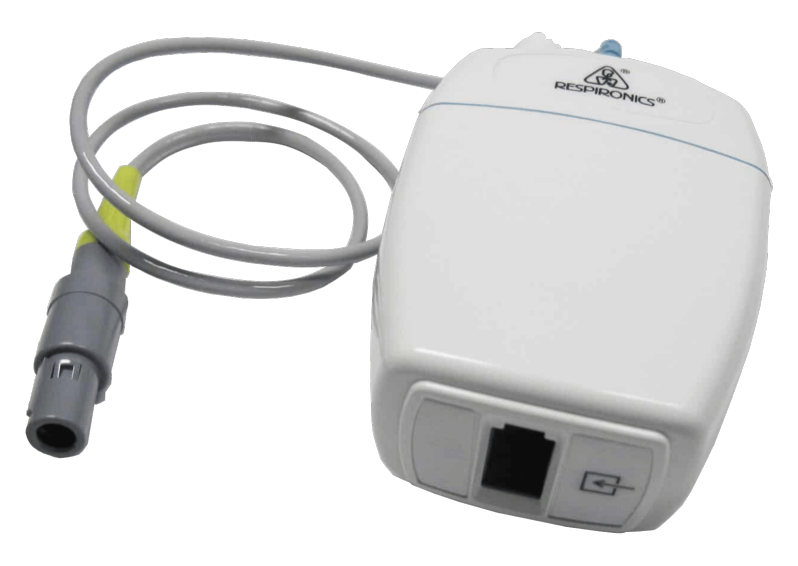
The sidestream capnometer takes a different approach. A sampling tube aspirates a small amount of gas from the airway and carries it to a sensor inside the monitor.
Because the sensor is not at the airway, the patient does not need to be intubated. A nasal cannula or face mask can feed the sample, so sidestream suits awake and spontaneously breathing patients. The trade-offs are a short delay while the sample travels, and a sampling line and water trap that need maintenance and can block with moisture. For the full comparison, see mainstream vs sidestream capnography.
3. Microstream Capnometer
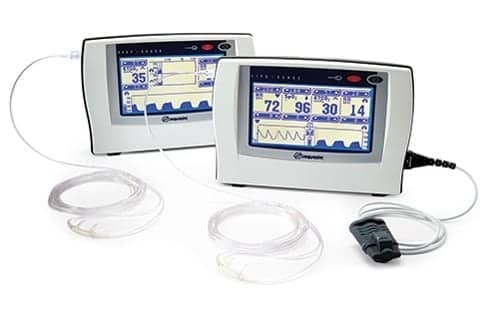
The microstream capnometer is a low-flow type of sidestream device. It draws a very small gas sample, around a tenth of the flow of a standard sidestream line.
That low sampling flow is its strength. It takes so little gas that it works well in patients with small breaths, which makes it a common choice for neonates and for procedural sedation. It also reduces the moisture problems of a standard sidestream line. Its trade-offs are the same family as sidestream, a small transit delay and a sampling line to manage. See capnography in paediatric and neonatal care for where it fits.
4. Colorimetric Capnometer
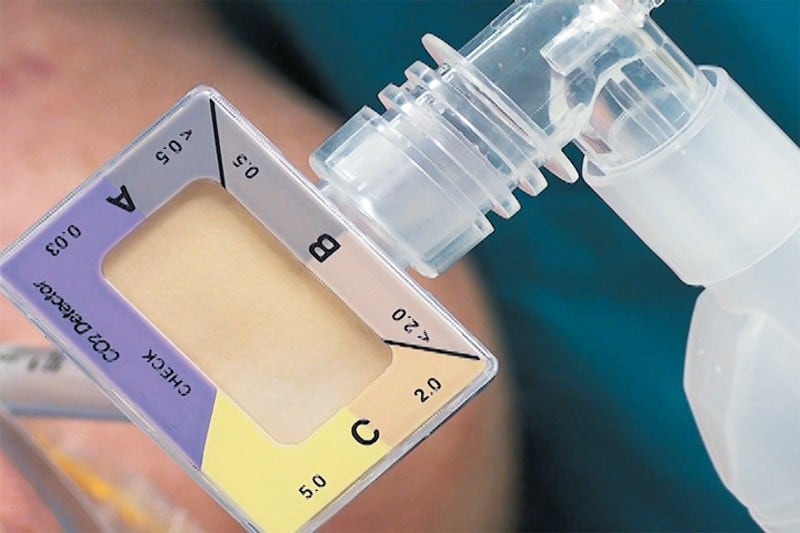
The colorimetric capnometer is the simplest type. It is a small disposable device with a chemical indicator that changes colour when it meets carbon dioxide.
It does not give a number or a waveform. It answers one question, is CO2 present, by changing colour with each breath. That makes it a quick, low-cost check, often used to confirm a tube in an emergency or in a low-resource setting. Its limits are clear: it is qualitative only, it cannot monitor over time, and it can be misled for a few breaths by CO2 in the stomach. It is a backup, not a monitor.
5. Transcutaneous Capnometer
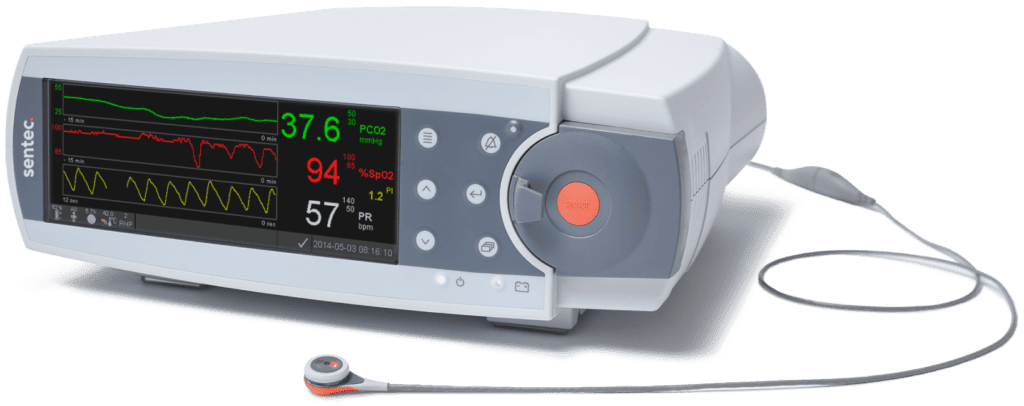
The transcutaneous capnometer is the odd one out, because it does not measure the breath at all. It measures CO2 through the skin.
A heated sensor is placed on the skin, and it reads the carbon dioxide that diffuses through the skin, giving an estimate of the CO2 in the blood. Because it is non-invasive and does not need a breath sample, it is used in neonatal and paediatric care and in sleep studies, where sampling the breath is difficult. It responds more slowly than the breath-based types, so it is used for trends rather than breath-by-breath monitoring.
How to choose the right capnometer
The choice is less about which type is best, and more about which fits your patient.
- Start with the airway. If the patient is intubated or ventilated, a mainstream capnometer is fast and direct. If they are awake and breathing on their own, sidestream or microstream is the method.
- Consider the patient’s size. For neonates and very small breaths, microstream or transcutaneous suits best, because they add little to the airway.
- Consider the setting. For a quick tube check in an emergency, colorimetric is enough. For continuous monitoring, you need an electronic type with a waveform.
For a fuller buyer’s guide, see what to look for when buying a portable capnograph, and for the values these devices read, the normal EtCO2 range.
Where RespiCOz fits
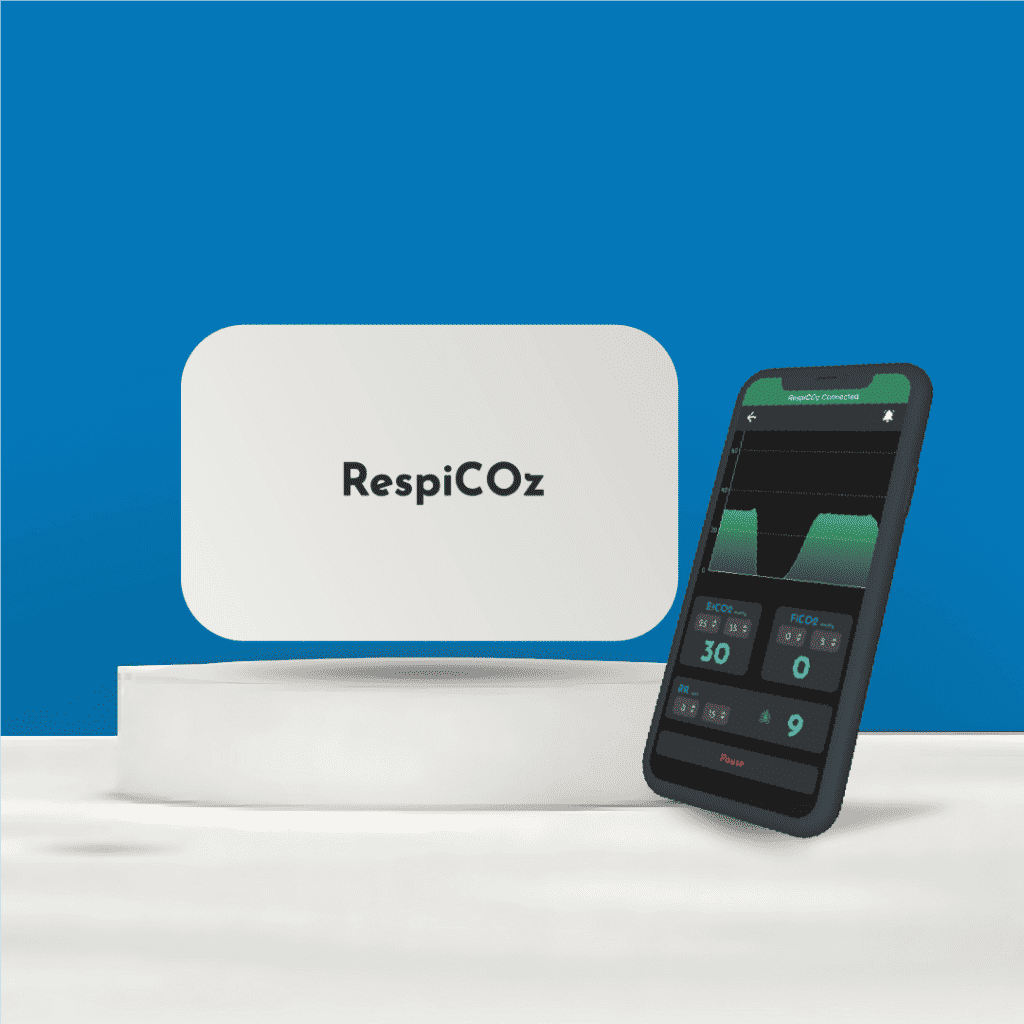
RespiCOz is a mainstream capnometer, built for airway-secured patients.
Its sensor sits at the airway for a fast, direct reading with no sampling line to block and no water trap to fill. It shows a live waveform and the EtCO2 value, monitors FiCO2 for rebreathing, and runs on battery so it travels with the patient. It is CDSCO-approved, made in India, and priced in the value middle. For how it compares with other portable devices, see the best handheld EtCO2 monitor guide.
Want to know more? Request a quote for your hospital here.
Frequently asked questions
What are the types of capnometers? There are five main types: mainstream, sidestream, microstream, colorimetric and transcutaneous. The first four measure carbon dioxide in the breath, while transcutaneous measures it through the skin.
What is the difference between mainstream and sidestream capnometers? A mainstream capnometer measures at the airway with the sensor in the breathing circuit. A sidestream capnometer draws a gas sample through a tube to a sensor inside the monitor.
Which capnometer is best for neonates? Microstream is commonly used for neonates because its very low sampling flow suits small breaths. Transcutaneous monitoring is also used in neonatal care.
What is a colorimetric capnometer used for? It is a simple, disposable chemical device that changes colour when CO2 is present. It is used for a quick check of tube placement, often in emergencies or low-resource settings, not for continuous monitoring.
Which type of capnometer is used for intubated patients? Mainstream is the natural choice for intubated and ventilated patients, because the sensor sits at the airway for a fast, direct reading with no sampling line.
Conclusion
The five types of capnometers, mainstream, sidestream, microstream, colorimetric and transcutaneous, each measure carbon dioxide in their own way, for their own kind of patient. Mainstream is fast and direct for intubated patients. Sidestream and microstream suit free-breathing and very small patients. Colorimetric is a simple check, and transcutaneous reads through the skin.
Match the type to the patient and the setting, and the right capnometer becomes clear.
To see these devices in clinical use, start with our five capnography use cases.
References
- Capnography. StatPearls, NCBI Bookshelf. Types and clinical role of capnography. ncbi.nlm.nih.gov
- Capnography. OpenAnesthesia. Mainstream, sidestream and sampling considerations. openanesthesia.org





3 thoughts on “5 types of capnometers you should know”
Pingback: Carbon Dioxide Detection In Medicine: 2026 Clinical Guide - Brainiac Healthcare - The World's First Smart Capnometer
Pingback: Normal EtCO2 Range: What The Numbers Mean - Brainiac Healthcare - The World's First Smart Capnometer
Pingback: Standalone EtCO2 Monitor: The Best Choice