A standalone EtCO2 monitor is a device that does one job well: it measures carbon dioxide in the breath and shows it on its own dedicated display. It is not a module tucked inside a large multiparameter monitor, and it is not a number squeezed onto a screen shared with five other readings.
For many hospitals, that focus is exactly what they need. This guide explains what a standalone EtCO2 monitor is, when it is the right choice, and what to look for before you buy.
Key takeaways
- A standalone EtCO2 monitor is dedicated to capnography, with its own display.
- It is not a module inside a multiparameter monitor, so it is cheaper and portable.
- A dedicated display shows the waveform clearly, not competing with other readings.
- It is ideal for the bedside, transport, wards, recovery and any room without a full monitor.
- Match the sensor and features to your patients, then judge the running cost.
What is a standalone EtCO2 monitor
A standalone EtCO2 monitor is a self-contained capnograph. It has its own sensor, its own processing and its own dedicated display for the EtCO2 value and waveform.
Contrast that with the two alternatives. One is a capnography module built into a large multiparameter monitor, where EtCO2 shares the screen with ECG, blood pressure, oxygen saturation and more. The other is a basic device that shows only a number, with no proper waveform. A standalone monitor sits between them: dedicated to capnography, but complete, with a waveform on its own display. For the wider device landscape, see types of capnometers.
Standalone versus a module in a multiparameter monitor
This is the decision most buyers are really making.
A capnography module inside a multiparameter monitor can look convenient, but it ties the reading to that monitor, its slot and its room. When the patient moves, the monitor stays. You also pay for every other parameter, whether you need it or not.
A standalone EtCO2 monitor is free of all that. It travels with the patient, it costs far less, and it can serve several rooms across a week. For the full comparison, see portable capnograph or multiparameter monitor.
Why a dedicated display matters
The display is more than a detail. It changes how quickly you can read the patient.
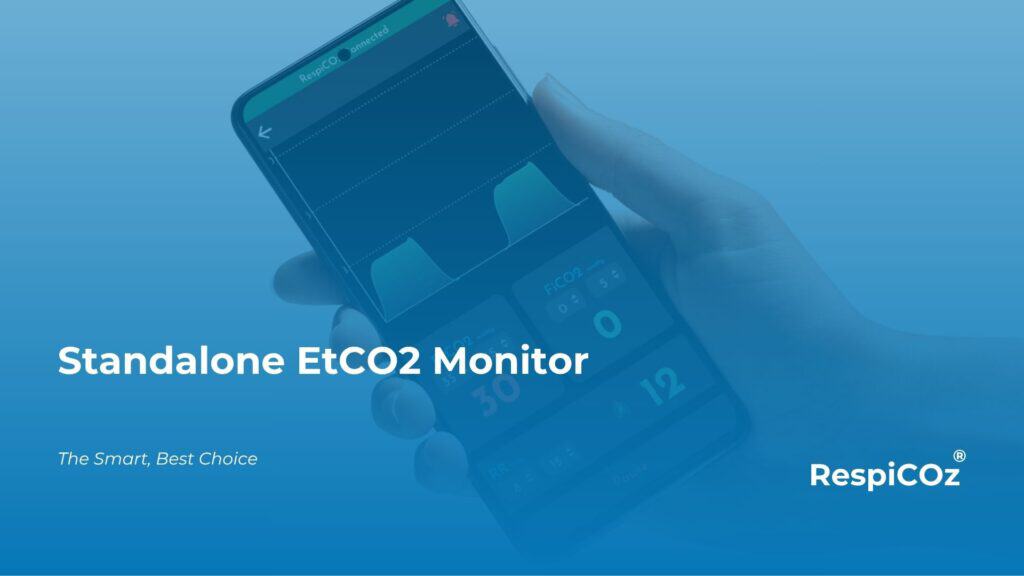
On a multiparameter monitor, the capnography waveform competes for space and attention with several other traces. On a standalone monitor with a dedicated display, the waveform and the number are front and centre, easy to read at a glance. In a fast-moving moment, that clarity matters. A dedicated display means capnography is the main event, not a footnote on a crowded screen.
When a standalone EtCO2 monitor is the right choice
A standalone monitor fits wherever capnography needs to be focused, portable or affordable.
- At the bedside and on the ward, where a full monitor is not installed.
- In transport and recovery, where the device must travel with the patient.
- In clinics, day-care and remote anaesthesia, where a multiparameter monitor is overkill.
- As a backup, ready when the main monitor is in use elsewhere.
In each of these, a standalone EtCO2 monitor delivers the ventilation signal without the cost and bulk of a full monitor.
What to look for in a standalone EtCO2 monitor
Judge any standalone monitor against these points.
- Sensor type. Mainstream for airway-secured patients, sidestream for free-breathing patients. See mainstream vs sidestream capnography.
- A waveform on a dedicated display. Not just a number. The waveform is what makes capnography useful.
- Battery and portability. It should travel and run without mains power.
- Alarms. Clear, adjustable alarms for apnoea, high and low EtCO2 and respiratory rate.
- FiCO2. Monitoring inspired CO2 adds a warning for rebreathing.
- Approval and support. CDSCO approval, warranty and local service. See what to look for when buying a portable capnograph.
Standalone versus multiparameter cost
The cost gap is large, and it favours the standalone monitor for focused use.
A multiparameter monitor with an EtCO2 module starts around ₹2,00,000, because you pay for every parameter. A standalone portable capnograph does the ventilation job for a fraction of that. If you only need EtCO2 monitoring at the bedside or in transport, the standalone route is far better value. For the full price picture, see capnograph price in India.
Where RespiCOz fits
RespiCOz is a standalone, dedicated mainstream EtCO2 monitor, built for exactly this role.
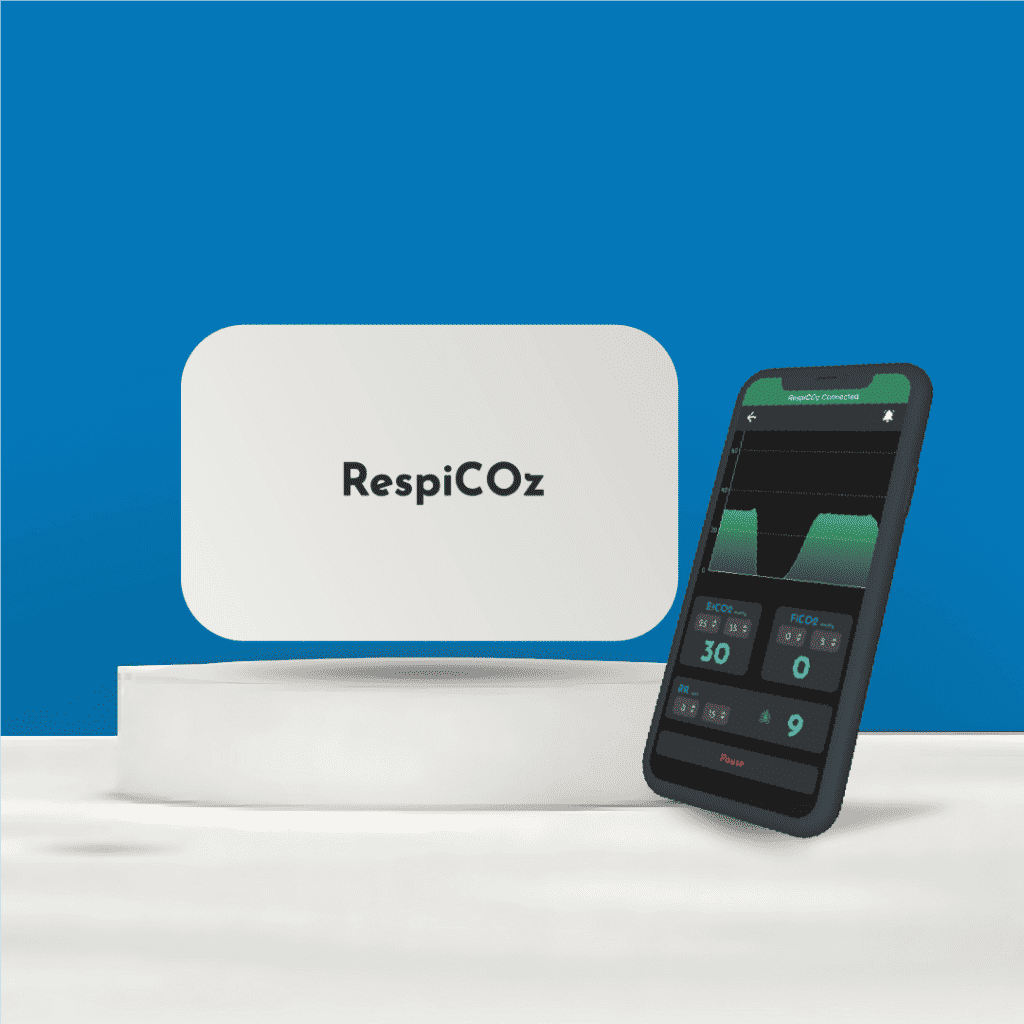
It is not a module inside a big monitor, and it is not a bare number. It shows the EtCO2 value and a live waveform on a dedicated display through its companion app, so capnography is the focus, not a footnote. The mainstream sensor sits at the airway for a fast reading with no sampling line to block. It adds FiCO2 monitoring for rebreathing, runs on battery, and is light enough to travel. It is CDSCO-approved, made in India, carries a two-year warranty, and is priced in the value middle at ₹60,000 to ₹1,00,000, a fraction of a multiparameter monitor.
For airway-secured patients who need focused, portable capnography, that is the case for a standalone monitor in one device. See how it compares in our guide to the best handheld EtCO2 monitor.
Ready to buy? Request a quote for your hospital here.
Frequently asked questions
What is a standalone EtCO2 monitor? It is a self-contained capnograph dedicated to measuring carbon dioxide in the breath, with its own sensor and its own display for the EtCO2 value and waveform. It is not a module inside a multiparameter monitor.
How is a standalone EtCO2 monitor different from a multiparameter monitor? A standalone monitor does only capnography, so it is cheaper and portable, and it travels with the patient. A multiparameter monitor bundles many parameters, costs far more, and stays fixed in its room.
Why does a dedicated display matter? On a shared multiparameter screen, the capnography waveform competes with other traces. A dedicated display keeps the waveform and number clear and easy to read at a glance.
When should I choose a standalone EtCO2 monitor? When you need focused ventilation monitoring at the bedside, in transport, in recovery, in clinics or as a backup, and a full multiparameter monitor is unnecessary or unavailable.
Is a standalone EtCO2 monitor cheaper than a multiparameter monitor? Much cheaper. A multiparameter monitor with EtCO2 starts around ₹2,00,000. A standalone portable capnograph does the ventilation job for a fraction of that.
Conclusion
A standalone EtCO2 monitor gives you dedicated capnography, on its own display, without the cost and bulk of a full monitor. For focused, portable or affordable monitoring, it beats both a buried module and a bare-number device.
Decide where you need the reading, match the sensor and features to your patients, and judge the running cost. For most bedside and transport use, a standalone monitor is the right and better-value choice.
To order RespiCOz or ask for a quote for your setting, get a quote here.
References
- Central Drugs Standard Control Organisation (CDSCO), Government of India. Medical device approvals. cdsco.gov.in
- Capnography. StatPearls, NCBI Bookshelf. Clinical role of capnography. ncbi.nlm.nih.gov