

The capnograph price in India runs from about ₹25,000 to well over ₹2,00,000. That is a wide gap, and the reason is simple. You are not buying one thing. You are buying a device category, a sensor type, a set of features and a running cost, all bundled into one number.
This guide breaks that number down. It shows the typical price bands, explains what actually drives the cost, and helps you avoid paying for capability you will never use.
Key takeaways
- The capnograph price in India depends far more on device type than on brand alone.
- A basic portable EtCO2 monitor costs a fraction of a full multiparameter monitor.
- Sensor choice, mainstream or sidestream, changes both the price and the running cost.
- Imported units carry duty and currency mark-ups that a made-in-India device avoids.
- The lowest sticker price is not always the lowest total cost. Consumables add up.
What is the capnograph price in India
Here are the broad bands, drawn from public Indian B2B listings. Treat them as indicative. Real quotes vary by brand, features, order size and vendor, so always ask for a current price.
| Device type | Indicative price band | What you get |
|---|---|---|
| Basic portable EtCO2 monitor | ₹25,000 to ₹50,000 | A number and a simple readout. Entry brands. Limited or no waveform |
| Dedicated portable capnograph | ₹1,00,000 to ₹1,50,000 | Continuous EtCO2, respiration rate and a live waveform. Branded units |
| Multiparameter monitor with EtCO2 | ₹2,00,000 and above | ECG, SpO2, NIBP, temperature and EtCO2 together. You pay for all of it |
The jump between bands is not random. Each one adds a layer of capability, and cost. The question is which layer you actually need. A focused, made-in-India device such as RespiCOz is priced in the middle, at ₹60,000 to ₹1,00,000, which is where the value sits for most buyers. More on that below. To go deeper on the decision itself, see what to know before buying a capnometer.
What drives the capnograph price in India
Seven factors move the number. Understanding them is how you avoid overpaying.
1. Device category. This is the biggest driver by far. A standalone capnograph does one job. A multiparameter monitor does five or six. If you buy the monitor only for its EtCO2 reading, you are paying for ECG, blood pressure and the rest that you may not need. See portable capnograph or multiparameter monitor.
2. Sensor technology. Mainstream sensors sit at the airway. Sidestream and microstream draw a gas sample through a line. The sensor type affects the purchase price, and it changes the running cost, which we come to below. For the full breakdown, see types of capnometers.
3. Standalone versus module. A capnography module added to an existing monitor can look cheap on paper. But it ties you to that monitor and its slot. A standalone device travels with the patient and stands on its own.
4. Imported versus made in India. Imported units carry customs duty, freight and a currency mark-up. Those costs sit inside the price you pay. A device made in India avoids that layer, which is often a large part of the gap between two otherwise similar units.
5. Consumables and running cost. Sidestream systems need sampling lines and water traps that are replaced regularly. Mainstream systems use a reusable or low-cost airway adapter. Over a year, consumables can cost more than the sensor difference. This is the cost most buyers forget.
6. Features. A live waveform, a rechargeable battery, connectivity, an app, adjustable alarms and adult, paediatric and neonate support all add cost. Each is worth paying for only if you will use it.
7. Regulatory approval and support. A CDSCO-approved device, backed by warranty, service, calibration and training, costs more to bring to market than an uncertified import. That cost buys you safety and support you can rely on. You can verify a device’s status through the CDSCO portal.
The hidden cost most buyers miss
Sticker price is only the start. Total cost of ownership is what you actually pay over the life of the device.
A sidestream unit with a low purchase price can cost more in the long run. Every sampling line and water trap is a repeat purchase. Multiply that by the number of patients across a year and the running cost becomes real money.
A mainstream device flips this. The sensor sits at the airway, so there is no sampling line to buy again and no water trap to replace. The purchase price may be similar, but the running cost is lower. When you compare two quotes, ask for the yearly consumable cost, not just the device cost. That single question often changes the decision.
How to choose without overpaying
Match the device to the job. That is the whole discipline.
- If you need full patient monitoring in an ICU or theatre, a multiparameter monitor earns its price.
- If you need reliable ventilation monitoring at the bedside, in recovery, on the ward or in transport, a dedicated portable capnograph does the job for a fraction of the cost.
- If you only ever need a spot number, a basic monitor may be enough, though you lose the waveform that makes capnography useful.
Most buyers who overpay do so by buying a multiparameter monitor for a job a portable capnograph would have done. For why the continuous reading matters in the first place, see capnography vs pulse oximetry and the normal EtCO2 range it should hold.
Where RespiCOz fits
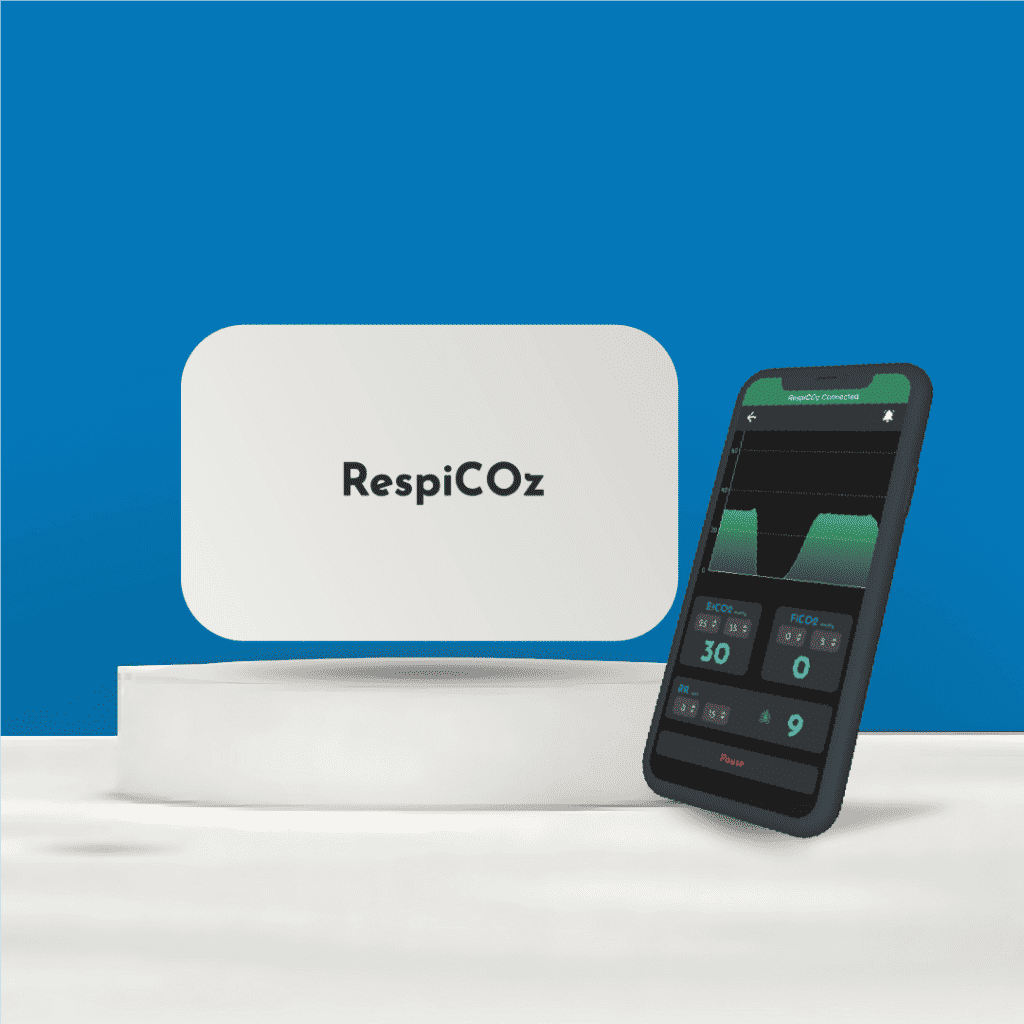
RespiCOz is a dedicated portable capnograph, priced deliberately in the middle of the market at ₹60,000 to ₹1,00,000.
That position is the whole value argument. A dedicated portable capnograph with a live waveform normally starts around ₹1,00,000 and climbs from there, mostly because the well-known units are imported. RespiCOz gives you the same core capability, continuous EtCO2, respiration rate and a live waveform, for less. It can do that because it is made in India and focused on one job.
Here is how it sits against the two devices buyers usually weigh it against.
| Basic EtCO2 monitor | RespiCOz | Imported portable capnograph | |
|---|---|---|---|
| Typical price | ₹25,000 to ₹50,000 | ₹60,000 to ₹1,00,000 | ₹1,00,000 to ₹1,50,000 |
| Live waveform | Often none | Yes, on the app | Yes |
| Mainstream sensor | Varies | Yes | Often |
| Sampling line and water trap | Sometimes | None needed | Varies |
| Made in India | Varies | Yes | No |
| CDSCO-approved | Varies | Yes | Varies |
The value shows up in two places. On day one, you pay less than an imported unit for the same core capability. Over the year, the mainstream sensor means no sampling line and no water trap to buy again, so the running cost stays low. Cheapest to buy and cheapest to own are usually two different devices. RespiCOz is built to be both.
To be clear, RespiCOz is a focused respiratory monitor, not a multiparameter monitor. That is why it costs a fraction of a ₹2,00,000 monitor while still giving you the reading that matters at the bedside and in transport.
For a current quote for your setting, see the device here.
Frequently asked questions
How much does a capnograph cost in India? Indicatively, a basic portable EtCO2 monitor runs ₹25,000 to ₹50,000, a dedicated portable capnograph with a waveform runs ₹1,00,000 to ₹1,50,000, and a multiparameter monitor with EtCO2 starts around ₹2,00,000. A made-in-India portable capnograph like RespiCOz sits in the value middle at ₹60,000 to ₹1,00,000, giving the waveform capability of the higher band for less. Always ask for a current quote.
Why are multiparameter monitors more expensive than standalone capnographs? Because you pay for every parameter, not just EtCO2. A multiparameter monitor bundles ECG, SpO2, blood pressure and temperature. If you only need ventilation monitoring, a standalone capnograph costs far less.
Is a mainstream or sidestream capnograph cheaper to run? Mainstream is usually cheaper to run. It has no sampling line or water trap to replace, so the yearly consumable cost is lower even when the purchase price is similar.
Does a made-in-India capnograph cost less than an imported one? Often yes. Imported units carry customs duty, freight and a currency mark-up inside the price. A made-in-India device avoids that layer.
What is the running cost of a capnograph? Mainly consumables. Sidestream devices need regular sampling lines and water traps. Mainstream devices use a reusable or low-cost airway adapter. Ask any vendor for the yearly consumable cost before you buy.
Conclusion
The capnograph price in India is not one number. It is a set of choices.
The device category sets most of the cost. The sensor type sets the running cost. Import status, features and support fill in the rest. Get those choices right and you pay for exactly what you need, and nothing more.
Before you sign a quote, ask two questions. What am I paying for that I will not use. And what will the consumables cost me each year. The answers usually point to a dedicated portable capnograph, which is where the real value sits for most bedside and transport use.
To pin down the right specification for your setting, start with what to know before buying a capnometer.
Prices in this guide are indicative, drawn from public Indian B2B listings, and change often. They are for general guidance and not a quotation.
References
- Capnography. StatPearls, NCBI Bookshelf. Clinical role and value of capnography. ncbi.nlm.nih.gov


3 thoughts on “Capnograph Price in India: What Drives the Cost”
Pingback: Medical Device Service In India: Proven, Reliable Support
Pingback: CDSCO Approved Capnograph: A Smart, Safe Buy
Pingback: Capnograph Cost Of Ownership: The Smart Way To Avoid Waste