

Opioid-induced respiratory depression is the quiet danger of the general ward. A patient recovering from surgery is given opioids for pain. The pain settles. So does their breathing, and sometimes it settles too far.
On the ward, no one is watching a monitor minute by minute. Checks come every few hours. In between, a patient can slow, stop breathing, and slip into trouble without a sound. This guide explains why it happens, what the evidence shows, and how capnography catches it before it becomes a crisis.
Key takeaways
- Opioid-induced respiratory depression, or OIRD, is common on the ward and often missed.
- The PRODIGY trial found around 46% of ward patients on opioids had at least one episode.
- Routine spot checks miss most episodes, because they happen between rounds.
- Supplemental oxygen hides the fall in oxygen, so capnography becomes the key warning.
- Continuous monitoring catches OIRD early. Match the sampling method to the patient.
Why the ward is where OIRD hides
The operating theatre and the recovery unit are heavily monitored. The general ward is not.
That is the gap. A post-surgical patient on opioids, often through a patient-controlled analgesia pump, is moved to a ward where monitoring is intermittent. Nurse-to-patient ratios are higher, checks are spaced out, and many events happen at night when observation is lightest.
The result is a preventable harm hiding in plain sight. The breathing problem is real, but the system is not built to see it in time.
What the PRODIGY trial showed
The scale of the problem was measured directly. The PRODIGY trial monitored 1335 patients on general care wards who were receiving opioids, using blinded continuous capnography and pulse oximetry at 16 sites across the United States, Europe and Asia.
The findings were striking. Around 46% of these patients had at least one respiratory depression episode. Routine ward monitoring missed up to 90% of them. In one analysis, 42% of episodes occurred within two hours of the last nursing check, which shows how easily a spaced-out check misses the event.
PRODIGY also built a risk score from five factors: age of 60 or over, sex, opioid naivety, sleep-disordered breathing, and chronic heart failure. The high-risk group had six times the odds of an episode compared with the low-risk group. The message is simple. OIRD is common, it is predictable, and intermittent checks do not catch it.
Why pulse oximetry alone is not enough
The instinct is to rely on the pulse oximeter. On the ward, that instinct is dangerous.
Pulse oximetry measures oxygen, not breathing. When a patient hypoventilates, carbon dioxide rises long before oxygen falls. Add supplemental oxygen, which many post-operative patients receive, and the oxygen saturation can stay reassuring while the patient is barely breathing. A PRODIGY analysis of supplemental oxygen found it was associated with more apnoea and slow breathing, even though the oxygen numbers looked no worse. The oxygen was hiding the problem.
Capnography does not have this blind spot. It measures ventilation directly, so it flags slow breathing and apnoea as they happen. For the full mechanism, see capnography vs pulse oximetry.
Who is most at risk
The PRODIGY score points to the patients who need closer watching.
- Age 60 or over.
- Sleep-disordered breathing, including obstructive sleep apnoea.
- Chronic heart failure.
- Opioid-naive patients, who have not built tolerance.
- Patients on supplemental oxygen, which raises the risk of apnoea and slow breathing.
A patient with several of these is a strong candidate for continuous monitoring rather than spot checks.
What the guidelines and safety bodies say
The direction of safety guidance is clear.
The Anesthesia Patient Safety Foundation recommends continuous monitoring of oxygen saturation for all hospitalised adults receiving intravenous opioids for pain after surgery. For patients also receiving supplemental oxygen, it recommends continuous monitoring of both oxygen saturation and end-tidal carbon dioxide. In other words, once a patient is on opioids and supplemental oxygen, capnography is the recommended addition, because it is the signal the pulse oximeter cannot give. This is reflected in patient safety guidance on PCA opioids.
Continuous versus intermittent monitoring
This is the heart of the matter. Spot checks are the standard on most wards, and spot checks are the problem.
A respiratory depression episode can begin and pass between two nursing rounds. PRODIGY showed that most episodes were missed by routine monitoring precisely because they fell between checks. Continuous electronic monitoring closes that window. It watches the trend the whole time, not just at the moment a nurse happens to be at the bedside.
The practical approach is to use the risk score. Match the intensity of monitoring to the patient. A high-risk patient on opioids and supplemental oxygen benefits most from continuous capnography.
How capnography catches OIRD early
Capnography turns the earliest signs of OIRD into something you can see.
A falling respiratory rate shows on the waveform before anything else changes. A pause in breathing shows as a flat trace. A rising or falling EtCO₂ tracks the change in ventilation. All of this appears before the oxygen saturation moves. For what the numbers mean, see the normal EtCO₂ range, and for the same problem during procedures, see capnography in procedural sedation.
Where RespiCOz fits
Capnography belongs on the ward for patients on opioids. The honest detail is the sampling method.
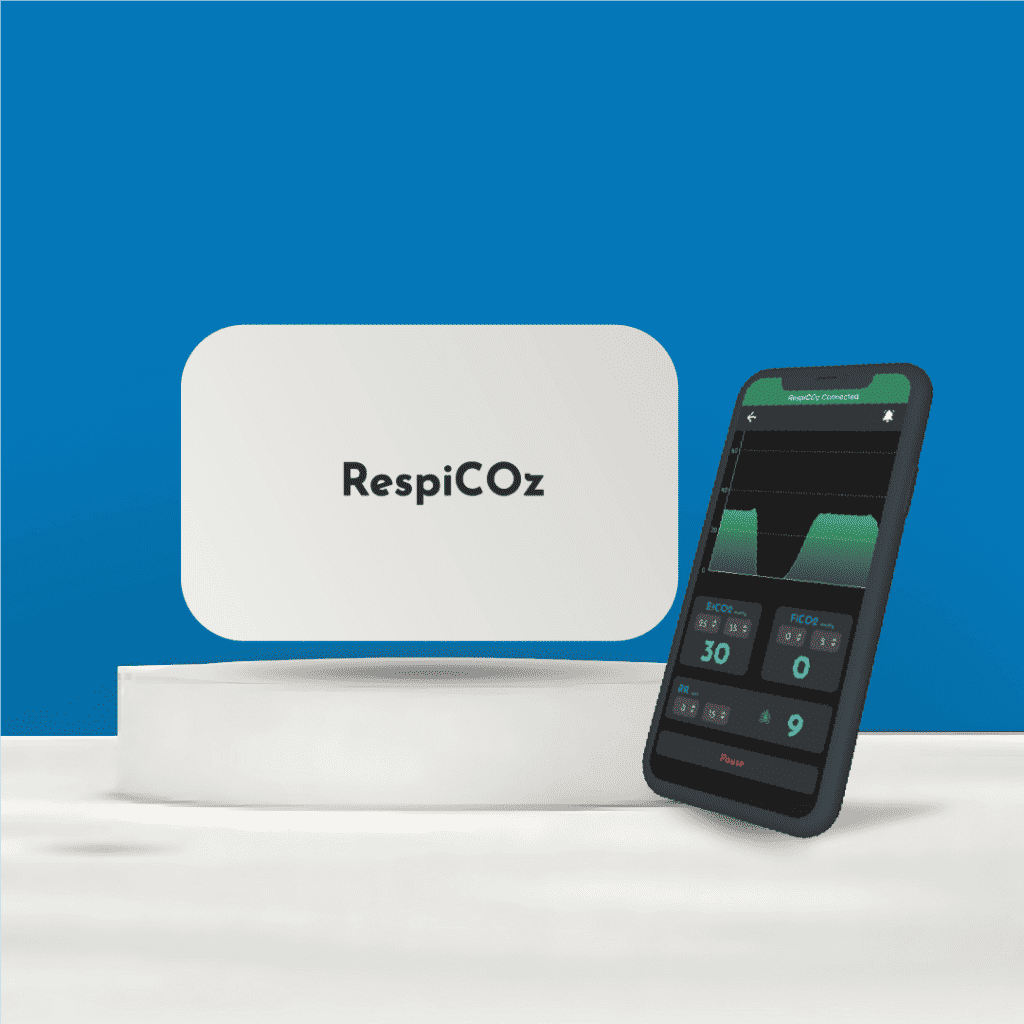
Most ward patients on opioids are awake and breathing on their own. For them, continuous capnography usually means microstream or sidestream sampling through a nasal cannula, which is how the PRODIGY monitors worked. RespiCOz is a mainstream capnograph, so it is at its best with ward and step-down patients who have an airway in place, such as those on non-invasive ventilation or a tracheostomy, and it brings portable capnography to the bedside where a fixed monitor is not available.
For choosing the right sampling method for the patient, see mainstream vs sidestream capnography. RespiCOz is a focused respiratory monitor, priced in the value middle at ₹60,000 to ₹1,00,000, which makes portable capnography realistic for a ward that cannot fit a monitor to every bed. For how that compares, see capnograph price in India.
For a current quote for your setting, see the device here.
Frequently asked questions
What is opioid-induced respiratory depression? It is slow or stopped breathing caused by opioids depressing the drive to breathe. On the ward it can develop quietly in a patient recovering from surgery, and it can be fatal if missed.
Why is it so often missed on the ward? Because ward monitoring is intermittent. Episodes happen between nursing checks, and supplemental oxygen keeps the pulse oximeter looking normal while breathing is failing.
Why is capnography better than pulse oximetry for detecting it? Capnography measures ventilation directly, so it detects slow breathing and apnoea before oxygen levels fall. This matters most for patients on supplemental oxygen, where the oxygen reading is misleading.
Who is most at risk of OIRD? The PRODIGY score highlights age 60 or over, sleep-disordered breathing, chronic heart failure, opioid naivety, and patients on supplemental oxygen.
Is continuous monitoring really needed? For at-risk patients, yes. Spot checks miss most episodes. Safety guidance recommends continuous oxygen monitoring for opioid patients, and continuous capnography as well for those on supplemental oxygen.
Conclusion
Opioid-induced respiratory depression is dangerous because it is quiet. The patient looks settled, the checks are hours apart, and the pulse oximeter, fed by supplemental oxygen, gives false comfort.
The evidence is now clear. OIRD is common, it is predictable from a few risk factors, and continuous capnography catches it when spot checks do not. Use the risk score, watch the ventilation signal, and match the sampling method to the patient.
Do that, and the danger stops being silent.
To see how this fits with the other clinical uses of EtCO₂, start with our five capnography use cases.
References
- Continuous Monitoring Detected Respiratory Depressive Episodes. Journal of Patient Safety. 2022. PRODIGY findings and missed episodes. journals.lww.com
- Fatal Patient-Controlled Analgesia Opioid-Induced Respiratory Depression. AHRQ PSNet. APSF monitoring recommendations. psnet.ahrq.gov
- Incidence of postoperative OIRD in patients on room air or supplemental oxygen: a post-hoc analysis of the PRODIGY trial. PubMed. 2023. pubmed.ncbi.nlm.nih.gov


4 thoughts on “Capnography for Opioid-Induced Respiratory Depression on the Ward”
Pingback: High EtCO2: Essential Causes And Danger Signs
Pingback: Drugs That Affect EtCO2: Essential Facts And Danger Signs
Pingback: Equipment Every Hospital Must Have: A Room-by-Room Guide - Brainiac Healthcare - The World's First Smart Capnometer
Pingback: Capnography Guidelines: A Complete Reference