


A low EtCO2 means carbon dioxide is not reaching the lungs, or is being blown off faster than the body makes it. The number sits below 35 mmHg, and the reason is one of four things.
This matters more urgently than a high reading. A high EtCO2 usually means the patient is breathing badly. A low one can mean the patient has lost their airway, or their circulation. Knowing which, fast, is the whole skill. This guide sorts the causes so you can find it.
Key takeaways
- Low EtCO2, or hypocapnia, is a reading below 35 mmHg in an adult.
- Four mechanisms explain it: lost blood flow, lost airway, over-breathing, or low metabolism.
- A sudden drop to zero is an equipment or airway emergency until proven otherwise.
- A sudden exponential fall points to a collapse in circulation, such as cardiac arrest or embolism.
- Low EtCO2 with a normal, crisp waveform is a classic clue to pulmonary embolism.
What counts as a low EtCO2
In a healthy adult at rest, EtCO2 sits between 35 and 45 mmHg. Below 35 mmHg is hypocapnia, a low reading.
As with a high value, the number is a starting point. A steady 32 in an anxious, over-breathing patient is not the same as a value falling steeply during anaesthesia. Read the value, then the speed of change and the waveform. For the bands, see the normal EtCO2 range. For the opposite problem, see what does high EtCO2 mean.
What causes low EtCO2
Four mechanisms, and the first two are emergencies.
| Mechanism | What is happening | Common causes |
|---|---|---|
| Blood is not carrying CO2 to the lungs | Circulation has failed or is obstructed | Cardiac arrest, pulmonary embolism, shock, blood loss, hypotension |
| The breath is not reaching the sensor | Airway or circuit failure | Disconnection, displaced or blocked tube, oesophageal intubation, leak, apnoea |
| Clearing too much | Ventilation exceeds CO2 production | Hyperventilation from anxiety, pain, stress, DKA, over-ventilation on a ventilator |
| Producing too little | Metabolism has slowed | Hypothermia, deep anaesthesia, reduced metabolic rate |
1. Blood is not carrying CO2 to the lungs
This is the mechanism that makes a low reading dangerous, and it is unique to hypocapnia.
Carbon dioxide has to be carried by blood from the tissues to the lungs before it can be breathed out. If blood flow collapses, CO2 never arrives, and the EtCO2 falls even though the patient may still be ventilating.
Cardiac arrest is the extreme case. During CPR, the EtCO2 reflects the blood flow your compressions generate. A value under 10 mmHg means the compressions need to improve. See capnography in cardiac arrest.
Pulmonary embolism obstructs the pulmonary circulation, so less CO2-rich blood reaches the lungs. Shock, blood loss and hypotension all reduce cardiac output and do the same thing more gradually.
There is a diagnostic consequence worth knowing. When blood flow falls, the EtCO2 reads lower than the true arterial CO2, and the gap between them widens. In this situation the EtCO2 understates the real value, so it is a trend tool, not a substitute for a blood gas.
2. The breath is not reaching the sensor
The second emergency is mechanical, not physiological.
A sudden drop to zero means, until proven otherwise, that the circuit has disconnected, the tube has been displaced or blocked, the tube is in the oesophagus, or the patient has stopped breathing. Check the patient and the circuit at once. Do not wait for the oxygen saturation to fall, because on supplemental oxygen it will lag by minutes. See endotracheal tube confirmation and capnography vs pulse oximetry.
This is also why capnography matters so much when a patient is moved, since movement is what dislodges tubes. See EtCO2 monitoring during transport.
3. Clearing too much (hyperventilation)
The commonest and usually the least alarming cause.
When a patient breathes faster or deeper than their CO2 production requires, they blow off carbon dioxide and the EtCO2 falls. Anxiety, pain and stress do this. So does the compensatory rapid breathing of diabetic ketoacidosis, where the body is trying to offset a metabolic acidosis. Stimulant drugs can cause it. And on a ventilator, settings that deliver too much minute ventilation will do it iatrogenically.
Hyperventilation is not harmless. A falling CO2 causes respiratory alkalosis and constricts cerebral blood vessels, reducing blood flow to the brain. As the EtCO2 approaches about 25 mmHg, patients may feel tingling in the hands, dizziness and confusion. This is precisely why over-ventilating a head-injured patient is harmful, and why capnography is used to avoid it.
4. Producing too little
The quietest cause.
If the body’s metabolism slows, it makes less carbon dioxide, and the EtCO2 drifts down. Hypothermia is the classic example, and deep anaesthesia or a generally reduced metabolic rate will do it too. This is usually a gradual change, not a sudden one.
The pulmonary embolism clue
One pattern is worth committing to memory, because capnography can point at it before anything else does.
A pulmonary embolism blocks the blood vessels, not the airways. So the patient ventilates normally, and the waveform stays crisp and normal in shape, while the EtCO2 reads low, because less CO2-rich blood is arriving at the lungs.
That combination, a low EtCO2 with a normal waveform, together with a low oxygen saturation and clear lung sounds, is a strong pointer to pulmonary embolism. It is one of the most useful things capnography tells you that no other bedside monitor will.
Sudden versus gradual
The speed of the fall narrows the cause immediately.
- Sudden drop to zero: disconnection, displaced or blocked tube, oesophageal intubation, apnoea. A mechanical emergency.
- Sudden exponential fall: cardiac arrest, massive pulmonary embolism, air embolism, severe hypotension or blood loss. A circulatory emergency.
- Gradual fall: hyperventilation, hypothermia, slowly falling cardiac output, ongoing blood loss.
For more on reading the trend, see what causes a rising or falling EtCO2 trend.
Read the number with the waveform
The shape tells you what the number cannot.
A crisp, normal waveform with a low value points to a perfusion problem, such as an embolism, or to hyperventilation. A flat line points to a disconnection, a displaced tube or apnoea. A shrinking, decrementing waveform is a classic sign of a tube that is not in the trachea, as any swallowed gas washes out over a few breaths. See capnography waveforms.
What to do about a low EtCO2
A short sequence, in priority order.
- Check the patient and the circuit first. Is the tube where it should be, and is everything connected.
- If the trace is flat, treat it as a lost airway until proven otherwise.
- Check perfusion. Pulse, blood pressure, blood loss. A collapsing circulation lowers EtCO2 fast.
- Consider pulmonary embolism if the waveform is normal but the value is low and the patient is hypoxic.
- Check ventilation settings for over-ventilation on a ventilator.
- Check temperature for hypothermia in a slow, gradual fall.
Where RespiCOz fits
A low EtCO2 is a time-critical reading, so it needs a monitor that shows the change instantly and stays with the patient.
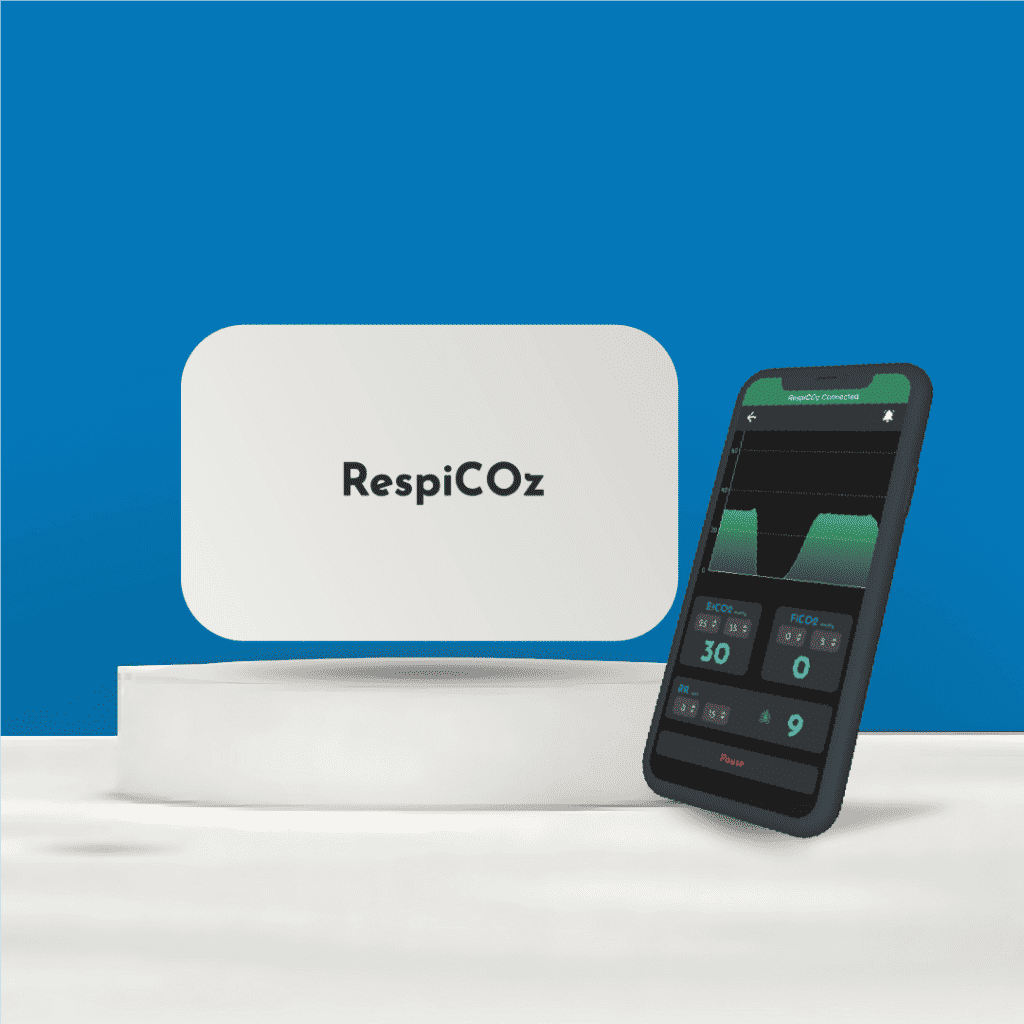
RespiCOz is a portable mainstream capnograph. The sensor sits at the airway, so there is no sampling line and no transit delay, and a disconnection or a lost tube shows on the very next breath. It displays the live value, the waveform and the trend together, which is exactly what you need to tell a perfusion problem from an airway one. It runs on battery and travels with the patient, through resuscitation, theatre and transport, which is where sudden drops happen.
It is a focused mainstream monitor for airway-secured patients, CDSCO-approved, made in India, and priced in the value middle at ₹60,000 to ₹1,00,000. For how it compares, see the best handheld EtCO2 monitor guide.
Ready to buy? Request a quote for your hospital here.
Frequently asked questions
What does a low EtCO2 mean? It means carbon dioxide is not reaching the lungs or is being cleared too fast. The causes are lost blood flow, a lost airway or circuit, over-breathing, or a slowed metabolism.
What EtCO2 is considered low? Below 35 mmHg in an adult at rest. The normal range is 35 to 45 mmHg, and below that is called hypocapnia.
What does a sudden drop in EtCO2 to zero mean? Treat it as an emergency. The usual causes are a circuit disconnection, a displaced or blocked tube, an oesophageal tube, or apnoea. Check the patient and the circuit immediately.
Can low EtCO2 indicate a pulmonary embolism? Yes. A pulmonary embolism blocks blood vessels rather than airways, so the waveform stays normal and crisp while the EtCO2 reads low. Low EtCO2 with a normal waveform and a low oxygen saturation is a strong pointer to embolism.
Is hyperventilation with a low EtCO2 harmful? It can be. A falling CO2 causes respiratory alkalosis and constricts cerebral blood vessels, reducing blood flow to the brain. This is why over-ventilating a head-injured patient is avoided, and capnography is used to guide it.
Conclusion
A low EtCO2 is more urgent than a high one, because it can mean the patient has lost their airway or their circulation, not merely that they are breathing poorly.
Work through the four mechanisms. Is blood reaching the lungs. Is the breath reaching the sensor. Is the patient over-breathing. Has metabolism slowed. Read the speed of the fall, and read the waveform with the number, because a crisp trace with a low value tells a very different story from a flat line.
Get that right, and a falling number becomes the earliest warning you have.
For the opposite problem, read what does high EtCO2 mean.
References
- Hypocarbia. StatPearls, NCBI Bookshelf. Hypocapnia, respiratory alkalosis and cerebral vasoconstriction. ncbi.nlm.nih.gov
- What EMS providers need to know about pulmonary embolism. EMS1. Low EtCO2 with a normal capnography waveform in pulmonary embolism. ems1.com
- Mechanisms of hypoxemia and hypocapnia in pulmonary embolism. PubMed. pubmed.ncbi.nlm.nih.gov




6 thoughts on “What Does Low EtCO2 Mean?”
Pingback: Capnography Troubleshooting: Simple Fixes For Bad Readings
Pingback: Capnography Myths: The Simple Truth Behind 12 Errors
Pingback: Essential Equipment For Emergency Physicians: 5 Safe Buys
Pingback: Ambulance Equipment List India: The Complete, Safe Guide
Pingback: EtCO2 In Sepsis: Essential Signs Of A Deadly Drop
Pingback: Capnography Waveform Chart: A Simple & Clear Field Card