

Capnography for small clinics is usually treated as optional. The reasoning sounds sensible. We are a small setup. We do simple cases. We have a pulse oximeter. Capnography is for big hospitals.
The evidence says the opposite. Smaller settings carry more risk, not less, and they have the least capacity to rescue a patient when something goes wrong. That makes capnography more valuable in a small clinic, not less. This guide sets out the case, and deals honestly with the cost objection that stops most clinics buying one.
Key takeaways
- Small and office-based settings carry a substantially higher risk of adverse events than larger facilities.
- They also have fewer staff, less equipment and less capacity to rescue a deteriorating patient.
- Capnography during sedation is associated with far fewer emergency rescue interventions.
- Regulators have begun requiring capnography in office-based settings with sedation.
- Cost is the usual objection, and a portable capnograph now costs a fraction of a full monitor.
The short answer
Yes. And arguably more than a large hospital does.
A big hospital has a full multiparameter monitor in every theatre, an anaesthetist per case, a crash team down the corridor and an intensive care unit upstairs. If a patient deteriorates, help is close and equipment is at hand.
A small clinic has none of that. Which means the margin for a missed respiratory event is much thinner. The monitor that gives you the earliest warning is worth more, not less, when help is further away.
Small settings carry more risk, not less
This is the finding most clinics have never seen.
Research comparing office-based procedures with ambulatory surgery centres found the relative risk of an adverse event was around 12.8 times greater in the office setting, and the relative risk of death around 11.8 times higher. Analyses of liability claims found office-based claims were roughly three times more severe, with deaths making up a far larger share.
The reasons are not mysterious. Smaller settings often have less monitoring, fewer trained staff, no immediate rescue team, and lighter regulation than hospitals. Staff are frequently not prepared for a complication that arrives without warning.
Respiratory events are exactly the kind of complication that arrives without warning. Which brings us to what capnography actually does.
What the evidence shows
The strongest data comes from sedation, which is what most small clinics do.
A large database analysis of patients undergoing gastrointestinal endoscopy with sedation compared those monitored with capnography against those monitored with pulse oximetry alone. It covered hundreds of thousands of inpatients and millions of outpatients.
Capnography monitoring was associated with a 61% reduction in the odds of a pharmacological rescue event in outpatients, meaning fewer patients needed naloxone or flumazenil to be pulled back from over-sedation. In inpatients it was associated with a 47% reduction in the odds of death at discharge.
The mechanism is simple. Capnography sees a breathing problem within seconds. A pulse oximeter, especially on supplemental oxygen, can look reassuring for minutes while the patient is barely breathing. See capnography in procedural sedation.
Regulators are catching up
This is no longer only a clinical recommendation.
The New York State Department of Health, for example, made capnography a required standard of care for monitoring ventilation in office-based surgery for patients receiving moderate sedation, deep sedation or general anaesthesia. Anaesthesia and dental bodies have moved the same way for moderate and deep sedation.
The direction of travel is clear. The question is shifting from whether a small setting should have capnography to when it will be expected to.
The real objection is cost
Ask a small clinic why they have not bought one, and the answer is almost always price.
That objection was reasonable when capnography meant a ₹2,00,000 multiparameter monitor. It is much weaker now.
A multiparameter monitor bundles ECG, blood pressure, oxygen saturation, temperature and EtCO2, and you pay for all of it. If what you need is the ventilation signal, a portable capnograph delivers it for a fraction of that price. A made-in-India portable device sits around ₹60,000 to ₹1,00,000. For the full breakdown, see capnograph price in India and portable capnograph or multiparameter monitor.
There is a second saving people miss. One portable device is not tied to a room. It moves from the procedure room to recovery to the emergency bay, so a single unit can cover several settings that would otherwise each need a monitor. See handheld vs benchtop capnography.
Then set that against the other side of the ledger. A single serious respiratory event costs a small clinic far more than a monitor: an emergency transfer, a rescue drug, a family, a reputation in a local community, and potentially a claim. The monitor is the cheaper item.
Which small settings need it most
| Setting | Why capnography matters |
|---|---|
| Nursing homes and small hospitals doing general anaesthesia | Every anaesthetised patient needs continuous ventilation monitoring |
| Day-care and short-stay surgery | Airway in place, patient waking, monitoring often lighter |
| Dental and oral surgery with sedation | Respiratory events are the leading cause of harm in these settings |
| Endoscopy and GI day-care | Deep sedation, supplemental oxygen hiding desaturation |
| Small emergency rooms | Tube confirmation and resuscitation, often without a full monitor |
| Recovery bays | Residual anaesthesia and opioids, lighter observation |
What a small clinic should buy
Keep the specification honest and the spend focused.
- Match the sensor to your patients. Intubated or ventilated cases need a mainstream device. Awake, free-breathing sedation cases need sidestream or microstream through a nasal cannula. See mainstream vs sidestream capnography.
- Insist on a waveform, not just a number.
- Choose portable, so one device covers several rooms.
- Check CDSCO approval, warranty and local service, because a small clinic cannot afford long downtime.
The full checklist is in what to look for when buying a portable capnograph.
Where RespiCOz fits
RespiCOz was built for exactly this gap: the setting that needs capnography but cannot justify a full monitor in every room.
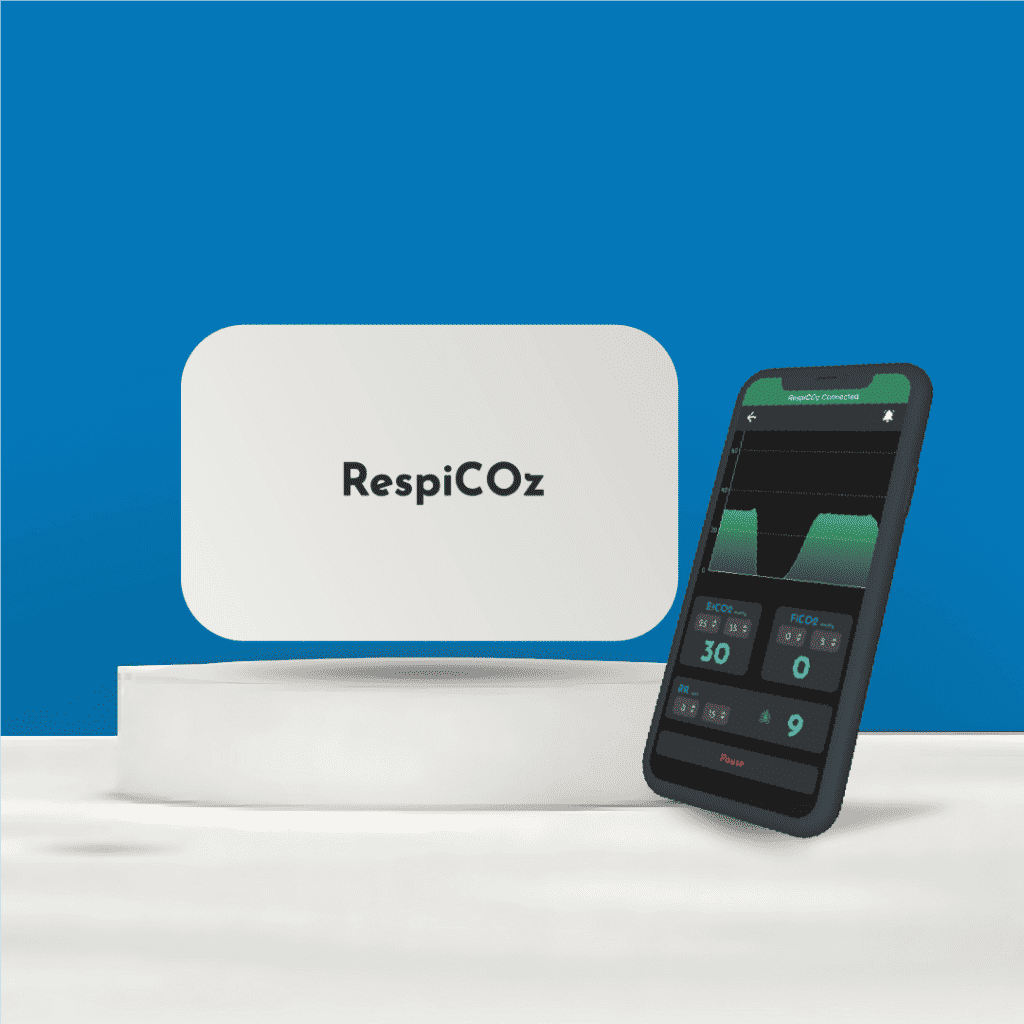
It is a portable mainstream capnograph, so it suits the airway-secured cases a small hospital or nursing home actually does. General anaesthesia, day-care surgery with a tube or supraglottic airway, resuscitation in the emergency room, and monitoring through recovery and transfer. It shows the EtCO2 value, the waveform and FiCO2, runs on battery, and moves between rooms rather than being fixed to one.
At ₹60,000 to ₹1,00,000 it is a realistic purchase for a small clinic, not a capital project. It is CDSCO-approved and made in India, with a two-year warranty and a dedicated support team, so service does not mean waiting on an imported part.
To be straightforward about the limit: if your work is mainly sedation of awake, free-breathing patients on a nasal cannula, sidestream or microstream is the right method, and RespiCOz is not that device. For airway-secured cases, it is one of the strongest value choices available in India. See best capnography device in India.
Ready to buy? Request a quote for your clinic here.
Frequently asked questions
Do small clinics really need capnography? Yes, and arguably more than large hospitals. Small settings carry a higher risk of adverse events and have less capacity to rescue a deteriorating patient, which makes an early warning monitor more valuable, not less.
Is capnography required in small clinics and offices? Increasingly, yes. Some regulators, such as the New York State Department of Health, now require capnography for office-based surgery with moderate sedation, deep sedation or general anaesthesia. Anaesthesia and dental bodies have moved the same way.
Is a pulse oximeter enough for a small clinic? No. Pulse oximetry measures oxygen, not breathing. On supplemental oxygen it can look normal for minutes after a patient stops ventilating. Capnography detects the problem within seconds.
How much does capnography cost for a small clinic? A portable capnograph typically costs far less than a multiparameter monitor. A made-in-India portable device runs around ₹60,000 to ₹1,00,000, against ₹2,00,000 and above for a full monitor.
Can one capnograph cover several rooms? Yes, if it is portable. A handheld device moves from the procedure room to recovery to the emergency bay, so a small clinic can often manage with one rather than fitting a monitor to every room.
Conclusion
Capnography for small clinics is not a luxury bought once the budget allows. It is the monitor that matters most where help is furthest away.
Small settings carry more risk, not less. The evidence shows capnography sharply reduces the rescue interventions that follow a missed respiratory event. Regulators are beginning to require it. And the cost objection that once made sense no longer holds, because a portable capnograph costs a fraction of a full monitor and can cover more than one room.
Match the device to your patients, insist on a waveform, and the safety case pays for itself the first time it warns you early.
To choose the right specification, start with what to look for when buying a portable capnograph.
References
- Office-Based Surgical and Medical Procedures: Educational Gaps. NCBI PMC. Relative risk of adverse events and death in office settings versus ambulatory surgery centres. pmc.ncbi.nlm.nih.gov
- Capnography sensor use is associated with reduction of adverse outcomes during gastrointestinal endoscopic procedures with sedation. NCBI PMC. Reduction in rescue events and death. ncbi.nlm.nih.gov
- Statement on Use of Capnography in Office-Based Surgery. New York State Department of Health. health.ny.gov



5 thoughts on “Do Small Clinics Really Need Capnography?”
Pingback: 12 Capnography Myths That Still Get Patients Hurt - Brainiac Healthcare - The World's First Smart Capnometer
Pingback: 3 Products Every Anaesthesiologist Must Have - Brainiac Healthcare - The World's First Smart Capnometer
Pingback: Essential Equipment For Emergency Physicians: 5 Safe Buys
Pingback: Essential Equipment For Anaesthesiologists: 3 Safe Buys
Pingback: Hospital Equipment List India: The Safe, Essential Guide