“Is a capnograph too expensive?” is the objection we hear most often, and it is a fair one to raise. A capnograph is a real cost on a real budget, and no hospital should spend without asking whether it is worth it.
But the question contains a hidden assumption, that the sticker price is the right number to judge it on. It is not. A capnograph is cheap or expensive only relative to what it saves you and what it replaces, and once you look at those, the answer usually changes. Here is the honest case.
Key takeaways
- The sticker price is the smallest part of the real cost question.
- A single serious respiratory event costs a hospital far more than any capnograph.
- Capnography has been shown to reduce acute respiratory events and save cost per procedure.
- A dedicated capnograph is a fraction of the multiparameter monitor it often replaces.
- The honest exception: if you never manage airway-secured patients, you do not need one.
The sticker price is the wrong number
When a hospital asks whether a capnograph is too expensive, it is almost always comparing the device price against nothing. Against zero. And against zero, any spend looks like a cost.
The right comparison is not the price against nothing. It is the price against three other numbers: what the device saves you, what it replaces, and what a missed event costs you. Judge it against those, and the sticker price turns out to be the least important figure in the decision.
Number one: what a missed event costs
Start with the number nobody puts on the quote.
A capnograph exists to catch respiratory trouble early, an oesophageal tube, a disconnection, a patient sliding into respiratory depression, before it becomes a crisis. When one of those is missed, the cost is not hypothetical. It is an emergency escalation, a rescue drug, an extended stay, a transfer, a potential claim, and a mark against the hospital’s reputation in a community where word travels.
One such event costs a hospital far more than a capnograph does. The device does not have to prevent many missed events to have paid for itself. It arguably has to prevent one. That is the real return, and it never appears on a price comparison because it is a cost avoided rather than a cost spent.
Number two: what the evidence shows
This is not only a logical argument. It has been measured.
A health technology assessment of capnography during sedation found that adding it reduced the proportion of patients experiencing an acute respiratory event by around 18%, and produced a net cost saving per procedure. Research into office and small-clinic settings has found they carry a substantially higher risk of adverse events than larger facilities, roughly an order of magnitude higher in some analyses, with less capacity to rescue a patient when something goes wrong.
Those studies come from other health systems, so the rupee amounts do not transfer directly to India. But the direction does, and the direction is clear: capnography reduces the events that are expensive, and the smaller and less-resourced the setting, the more it has to gain. See do small clinics really need capnography.
Number three: what it replaces
Now compare the capnograph against the alternative a hospital would otherwise buy.
The usual way to get an EtCO2 reading is a multiparameter monitor with a capnography module, which starts around ₹2,00,000 and rises from there, and much of which is capability you may not need. A dedicated portable capnograph delivers the ventilation signal for a fraction of that.
So the honest framing is not “a capnograph is an expensive new cost”. It is “a dedicated capnograph is the affordable way to get capnography, compared with the monitor you would otherwise buy.” See capnograph vs multiparameter monitor.
Number four: the cost of owning it
The sticker price is also not the lifetime price, and here the comparison can reverse.
A cheaper device with a short warranty, no stated service, and recurring sampling-line consumables can cost far more over five years than a dearer device with a long warranty, local service and no consumables. Price is what you pay once. Cost is what you pay for years. See capnograph cost of ownership.
Why RespiCOz is built around this
RespiCOz was designed specifically to take the price objection off the table, in a particular way: not by being the cheapest device, but by removing the costs that make capnography expensive.
It keeps the sensor small and moves the display and processing onto a phone the clinician already owns, which is what lets it sit at ₹99,990 rather than the ₹2,00,000-plus of a multiparameter monitor. See what makes a capnometer smart. Being a mainstream device, it has no sampling lines or water traps to buy again, so the running cost stays low. And being made in India with a dedicated technical team and a two-year warranty, its service cost and downtime cost are low too. See warranty, service and support for medical devices in India.
Add those up and the device is inexpensive to own, not only to buy, which is the number that actually matters.
The honest exception
We will not pretend a capnograph is worth it for everyone, because that would undermine everything above.
If a hospital genuinely never manages airway-secured patients, never gives general anaesthesia, never intubates, never ventilates, then it does not need a mainstream capnograph, and no cost argument changes that. The value is real only where the clinical need is real. For almost any setting that anaesthetises, ventilates, sedates or resuscitates, that need is present, and the case holds.
Where RespiCOz fits
RespiCOz is the answer to the price objection for hospitals that do manage airway-secured patients and have gone without capnography because a full monitor was too expensive.
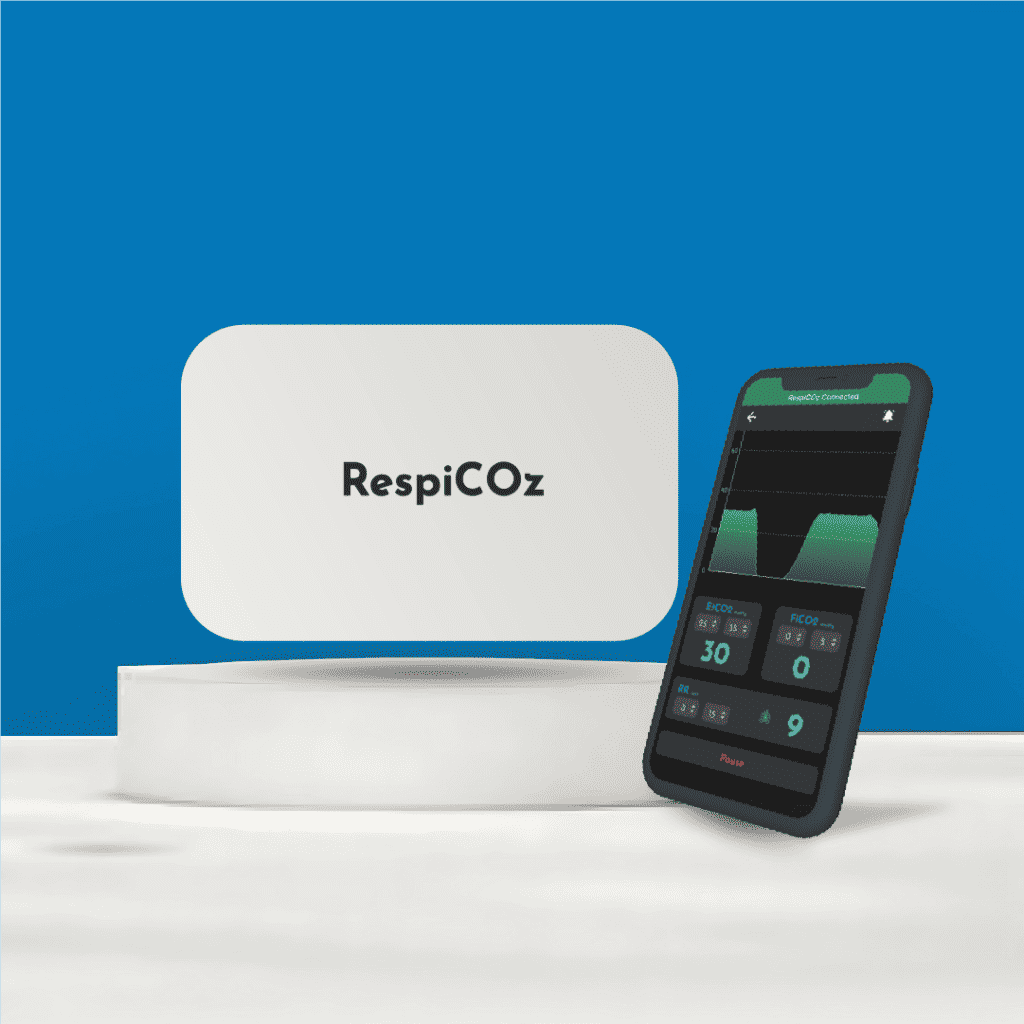
It is a portable mainstream capnograph measuring EtCO2, FiCO2 and respiratory rate, CDSCO approved, made in India, with a two-year device warranty and a dedicated technical team, at ₹99,990. It brings capnography within reach of the small hospitals, clinics, day-care theatres and ambulances that a multiparameter monitor priced out.
It is a focused monitor for airway-secured patients. A free-breathing patient on a nasal cannula needs sidestream or microstream sampling. For a device comparison, see the best handheld EtCO2 monitor guide.
Ready to talk numbers for your setting? Request a quote here.
Frequently asked questions
Is a capnograph too expensive for a small hospital? Usually not, when judged correctly. The sticker price is small against the cost of one missed respiratory event, and a dedicated portable capnograph costs a fraction of the multiparameter monitor that is the usual alternative.
What is the real cost of not having a capnograph? A missed oesophageal tube, disconnection or respiratory depression can lead to an emergency escalation, a rescue drug, an extended stay, a transfer and a possible claim. One such event costs far more than the device.
Does capnography actually save money? Evidence from sedation monitoring shows capnography reduces acute respiratory events by around 18% and can produce a net saving per procedure. The rupee figures differ by health system, but the direction holds.
Why is a dedicated capnograph cheaper than a multiparameter monitor? A multiparameter monitor bundles many parameters and starts around ₹2,00,000 with an EtCO2 module. A dedicated capnograph delivers only the ventilation signal, so it costs far less and is portable.
When is a capnograph not worth the cost? If a setting genuinely never manages airway-secured patients, never anaesthetises, intubates or ventilates, it does not need a mainstream capnograph. The value depends on the clinical need being real.
Conclusion
Is a capnograph too expensive? Only if you judge it by the one number that matters least. The sticker price tells you what you pay today. It tells you nothing about what a missed event costs, what the device saves, what it replaces, or what it costs to own over five years.
Weigh it against those, and the expensive option is usually going without. A single prevented event pays for the device, and a dedicated, locally serviced capnograph brings that protection within reach of the settings that need it most.
To see the full ownership maths, start with capnograph cost of ownership.
Figures in this guide are indicative and drawn from published research in various health systems. They illustrate direction, not a guaranteed return. Verify pricing and clinical evidence for your own setting.
References
- Capnography for Monitoring End-Tidal CO2: A Health Technology Assessment. Economic review: reduction in acute events and cost saving per procedure. CADTH, NCBI Bookshelf. ncbi.nlm.nih.gov
- Office-Based Surgical and Medical Procedures: Educational Gaps. Relative risk of adverse events in office settings. NCBI PMC. pmc.ncbi.nlm.nih.gov
- International Standards for a Safe Practice of Anesthesia. WHO and WFSA. Affordable capnography as a route to safe practice. wfsahq.org