


Capnography waveforms say different things about your patient. Based on that, you can diagnose and treat your patients accordingly.
Here are some different capnograms that help you to identify your patient’s conditions.
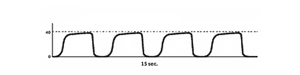
Normal Capnogram
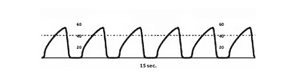
Bronchospasm/Asthma/COPD
Increasing EtCO2 (Hypoventilation)
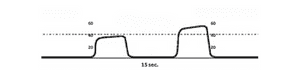
- Decrease in Respiratory Rate & Tidal Volume
- Increase in Metabolic Rate
Decreasing EtCO2 (Hyperventilation)
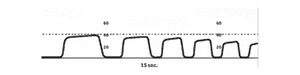
- Increase in Respiratory Rate & Tidal Volume
- Fall in Body Temperature
Rebreathing CO2
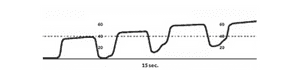
- Faulty expiratory valve
- Inadequate inspiratory flow
- Insufficient expiratory time
Curare Cleft

- The patient is mechanically ventilated
- Depth of cleft is proportional to the degree of muscle relaxant
Accurate capnogram analysis requires a thorough understanding of respiratory physiology and waveform interpretation. Enhancing your skills and knowledge in this area will improve patient care and outcomes.
References:
- How to read and interpret capnography waveforms? [Link]
—
[Click here] to learn more about “The World’s First Smart Capnometer”







11 thoughts on “What capnography waveforms say about your patients?”
Pingback: Carbon Dioxide Detection In Medicine: 2026 Clinical Guide - Brainiac Healthcare - The World's First Smart Capnometer
Pingback: Capnography For Endotracheal Tube Confirmation: 2026 Clinical Guide - Brainiac Healthcare - The World's First Smart Capnometer
Pingback: Capnography For Endotracheal Tube Confirmation (2026 Guide)
Pingback: Capnography Vs Pulse Oximetry: Proven To Spot Danger Early
Pingback: What Is EtCO2? A Clear, Essential Guide
Pingback: Capnography Response Time: Proven To Catch Danger Fast
Pingback: NDIR Capnography Sensor: The Proven Core
Pingback: Capnography Troubleshooting: Common Errors And How To Fix Them - Brainiac Healthcare - The World's First Smart Capnometer
Pingback: Capnography In Asthma And COPD: Reading The Shark Fin - Brainiac Healthcare - The World's First Smart Capnometer
Pingback: Low EtCO2: Essential Causes And Dangerous Drops
Pingback: Capnography In Asthma And COPD: The Safe, Smart Guide