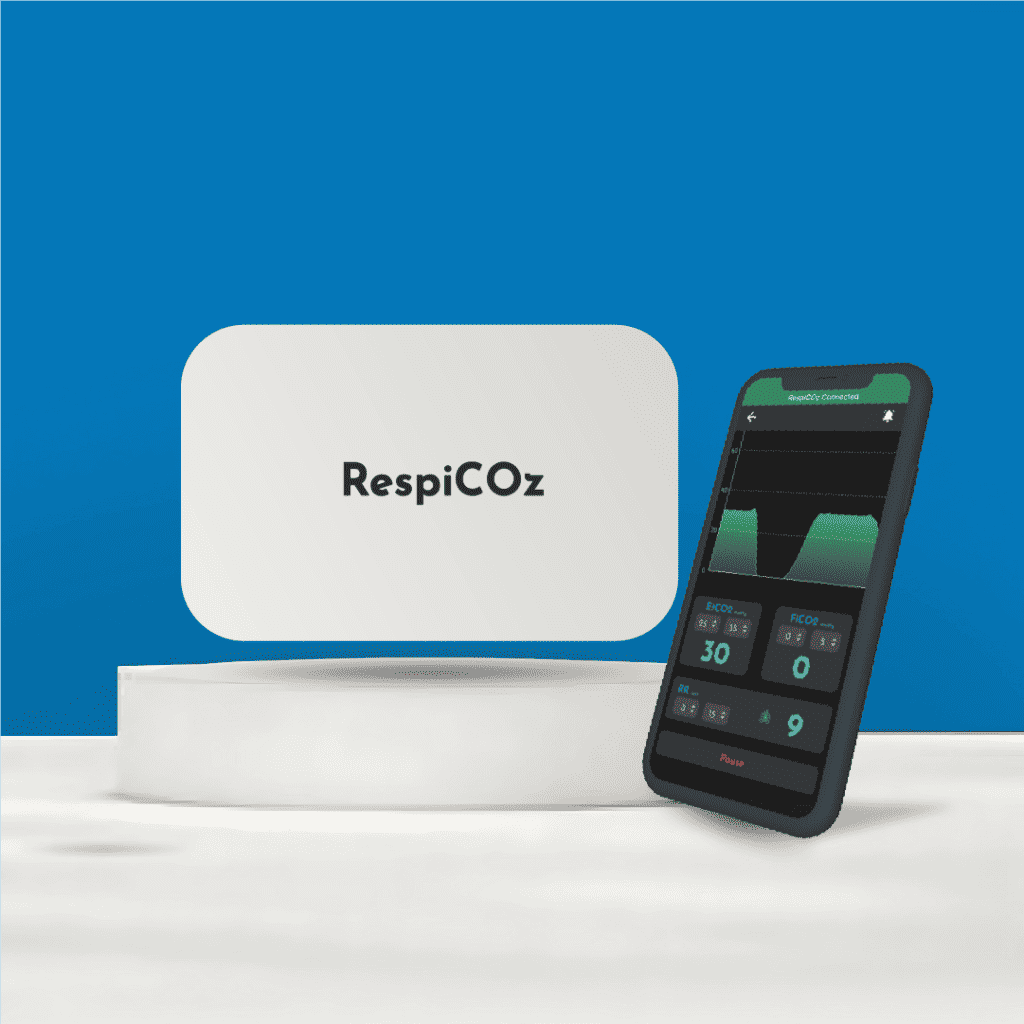
RespiCOz vs CapnoMed is a comparison many Indian buyers make, because both sit at the affordable end of the capnograph market and both are mainstream devices. We make one of them, so read this page with that in mind. It is written to be accurate, and where we cannot verify something about the other device, we say so rather than guess.
That last point turns out to be the whole comparison. The clearest difference between these two devices is not a spec. It is how much each one is willing to state about itself.
Key takeaways
- Both are mainstream capnographs measuring EtCO2 and respiratory rate.
- RespiCOz adds FiCO2 monitoring, which the CapnoMed device does not list.
- RespiCOz states CDSCO approval, a two-year warranty and dedicated support. CapnoMed publicly specifies little of this.
- A spec that is clearly stated and backed by a warranty is worth more than one that is unstated.
- For an Indian buyer, local approval and local service are the practical deciders.
What the two have in common
It is fair to start with the overlap, because it is real.
Both are mainstream capnographs. The sensor reads the breath at the airway, so neither needs a sampling line or a water trap, and both suit intubated and ventilated patients. Both measure end-tidal CO2 and respiratory rate. And both are positioned as affordable alternatives to a large, imported monitor. See mainstream vs sidestream capnography.
At the level of core function, confirming a tube and monitoring ventilation, both are capnographs doing the capnograph’s job.
RespiCOz vs CapnoMed at a glance
Where we could not verify a CapnoMed detail from published material, the table says so. Prices and specifications are indicative and change.
| RespiCOz | CapnoMed | |
|---|---|---|
| Technology | Mainstream | Mainstream |
| Parameters | EtCO2, FiCO2, RR, apnoea | EtCO2, RR, apnoea |
| FiCO2 monitoring | Included | Not listed |
| CO2 accuracy | ±2 mmHg | Not publicly specified |
| Warranty | 2 years device, 1 year sensor | Reported as 6 months |
| Regulatory approval | CDSCO approved | Not publicly specified |
| Service support | Dedicated technical team in India | Not publicly specified |
| Made in | India | China |
| Indicative price (India) | ~₹99,990 | ~₹50,000 |
The real difference: stated versus unstated
Look down the CapnoMed column and the pattern is not a list of weaknesses. It is a list of blanks.
That matters more than it first appears. In a medical device, a specification is only useful if it is stated and stands behind a warranty. “Accurate” means little without a stated figure. “Reliable” means little without a stated warranty period and a service commitment. “Approved” means little without a named approval you can check.
RespiCOz states its accuracy, its warranty on the device and the sensor separately, its CDSCO approval and its service arrangement. Where the CapnoMed device’s published information is silent, a buyer is left to assume, and assuming is not a sound basis for buying a patient monitor.
We are not saying the CapnoMed device is a poor one. We are saying that a device which states and warrants its specifications gives a hospital something a device which does not cannot: a commitment you can hold it to.
FiCO2: the one clear capability difference
Beyond what is stated, there is one capability difference that is clear.
RespiCOz monitors FiCO2, the fraction of inspired carbon dioxide, and the CapnoMed device does not list it. FiCO2 should be near zero, and a rise means the patient is rebreathing exhaled CO2, most often because a soda lime absorber is exhausted or a valve has failed. It is a circuit-level safety signal, and it is useful in exactly the anaesthesia and intensive care settings where a capnograph earns its place. See how soda lime affects the capnograph.
Price, in context
On the sticker, the CapnoMed device is reported at around ₹50,000, below the RespiCOz (₹99,990). An honest comparison acknowledges that.
But the price of a patient monitor is not only the sticker. It is the warranty that protects the purchase, the service that keeps it running, and the approval that lets you use it in an accredited setting. A reported six-month warranty and an unstated service arrangement carry a cost that does not appear on the price tag, the cost of downtime and of a device you cannot easily get repaired. For the full reasoning, see capnograph cost of ownership.
A slightly higher price with a two-year warranty, stated approval and local service is frequently the cheaper device to own.
For an Indian buyer, the practical deciders
Two differences matter most in day-to-day Indian practice.
Approval. RespiCOz is CDSCO approved, which an accredited hospital and most tenders will require. Where a device’s regulatory status is not publicly specified, that is a question you must resolve before you can use it in such a setting. See is your capnograph CDSCO approved.
Service. RespiCOz is made in India with a dedicated technical team, so service and spares are local. An imported device without a stated service arrangement can mean a long wait for a repair. See warranty, service and support for medical devices in India.
Which should you choose
Choose the CapnoMed device if the lowest possible sticker price is the single deciding factor, and you have independently confirmed its approval status, warranty and service arrangement for your setting.
Choose RespiCOz if you want stated, warranted specifications, FiCO2 monitoring, CDSCO approval and local Indian service, for a small step up in price that the warranty and support repay.
Whichever you consider, insist on stated specifications and a written warranty. A patient monitor is not the place for assumptions.
Where RespiCOz fits
RespiCOz is built for the Indian hospital that wants affordable mainstream capnography without giving up the things that make a device trustworthy.
It states what it does: mainstream NDIR measurement of EtCO2, FiCO2 and respiratory rate, with a fast reading at the airway and no sampling line to block. It is CDSCO approved, made in India, and backed by a two-year device warranty, a one-year sensor warranty and a dedicated technical team. It is priced at ₹99,990.
It is a focused monitor for airway-secured patients. A free-breathing patient on a nasal cannula needs sidestream or microstream sampling instead. For a wider view, see the best handheld EtCO2 monitor guide, and for the comparison with the imported premium option, RespiCOz vs Masimo EMMA.
Want to compare in your own setting? Request a quote or a demonstration here.
Frequently asked questions
Is RespiCOz an alternative to the CapnoMed capnograph? Yes, in category. Both are portable mainstream capnographs measuring EtCO2 and respiratory rate for patients with a secured airway. They differ in FiCO2, stated warranty, stated approval, origin, service and price.
Which is cheaper, RespiCOz or CapnoMed? On the sticker, the CapnoMed device is reported at around ₹50,000, below the RespiCOz price ₹99,990. Over the device’s life, warranty, service and approval affect the true cost, which can reverse that gap.
Does the CapnoMed device measure FiCO2? Its published information does not list FiCO2 monitoring. RespiCOz does monitor FiCO2, which warns of rebreathing from an exhausted absorber or a failed valve.
Is the CapnoMed capnograph CDSCO approved? Its regulatory approval status is not publicly specified in the material we could find. RespiCOz is CDSCO approved. For use in an accredited Indian setting, confirm a device’s approval before purchase.
Which is better for an Indian hospital? For most accredited Indian settings, a device with stated CDSCO approval, a stated warranty and local service has a practical advantage, because those are the things an accredited hospital and a tender will ask for.
Conclusion
RespiCOz vs CapnoMed comes down to something more fundamental than a spec sheet. Both are mainstream capnographs, and the CapnoMed device is a little cheaper on the sticker. But a patient monitor is bought on what it states and warrants, not on what it leaves blank.
RespiCOz states its accuracy, its warranty, its approval and its service, and it adds FiCO2 that the other does not list. Where the comparison device is silent, a buyer is left assuming, and a patient monitor is not something to assume about.
Insist on stated specifications and a written warranty, weigh the true cost rather than the sticker, and the decision tends to make itself.
To compare against the imported option too, see RespiCOz vs Masimo EMMA.
Competitor details in this comparison are drawn from publicly available information at the time of writing and are indicative only. They change, and some are not publicly specified. Verify current details directly with each manufacturer before purchase.
References
- Central Drugs Standard Control Organisation (CDSCO), Government of India. Medical Devices Rules, 2017 and device approvals. cdsco.gov.in
- Capnography. StatPearls, NCBI Bookshelf. Mainstream capnography and clinical role. ncbi.nlm.nih.gov